French MacLean

About French MacLean

This author has not yet filled in any details.
So far French MacLean has created 279 blog entries.

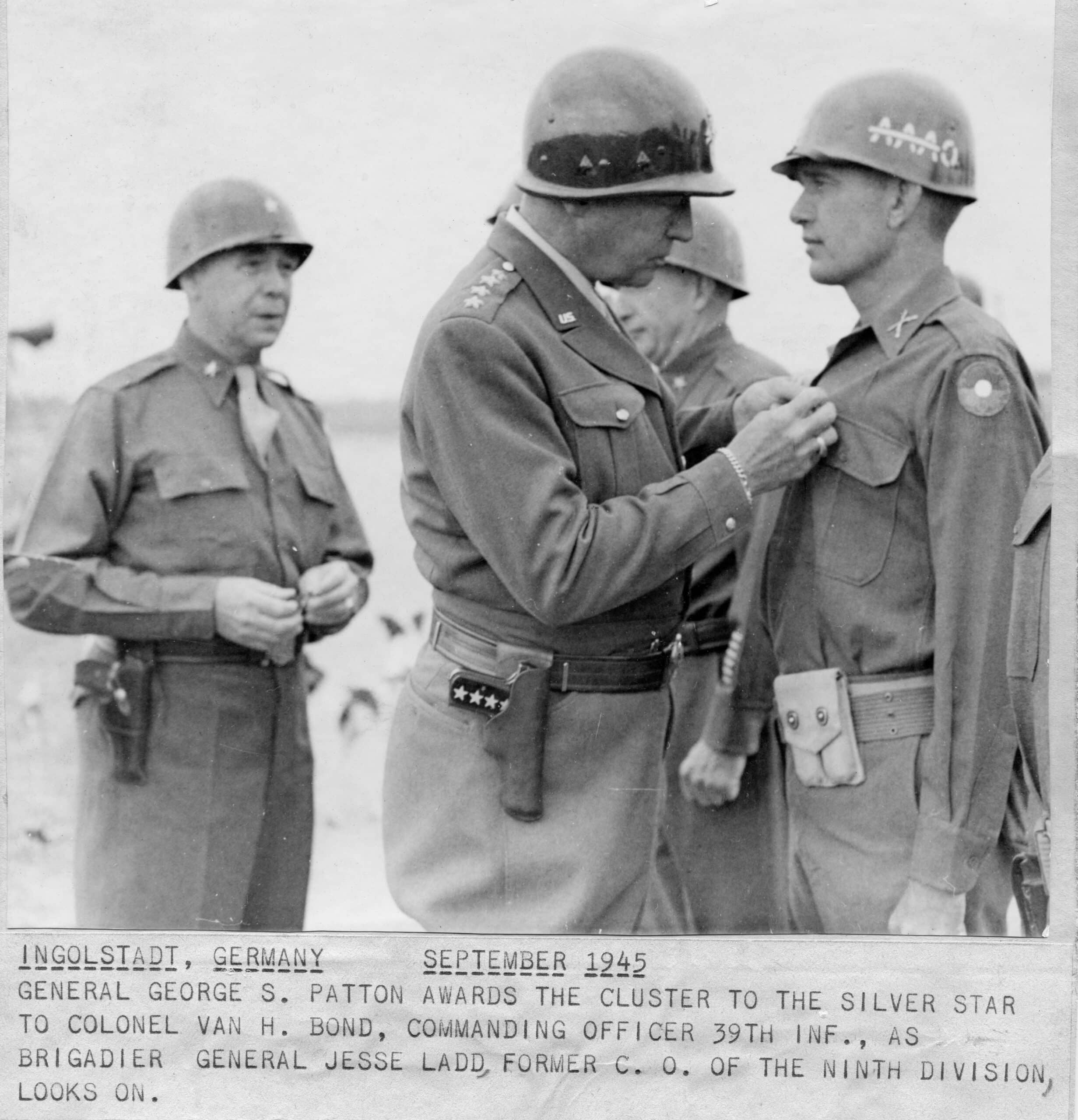
Patton Found His Scrappers

General George S. Patton was a walking quotation machine. His colorful image, hard-driving personality, and success as a military commander were at times overshadowed by numerous controversial public statements. On top of that, he is often difficult to understand, in part, because he is almost a one-of-a-kind historical figure, and because a senior military officer in the United States, like Patton, could not exist today. In my over three decades of military service, the only officer I saw that possessed even a small Pattonesque persona was General Norm Schwarzkopf. And today? The military establishment would have prevented him from even sniffing a promotion to flag rank, let alone ever achieving that.

Be that as it may, Patton made some remarkable observations, one of which would become true concerning Company B of the 39th Infantry Regiment. One evening, in a tent with other officers, during the 1941 Louisiana Maneuvers, a pensive Patton shared his thoughts on the war he knew would surely come:

“I’m worried because I’m not sure this country can field a fighting army at this stage in our history. We’ve pampered and confused our youth. We’ve talked too much about rights and not enough about duties. Now we’ve got to try and make them attack and kill. A big percentage of our men won’t be worth a goddam to us. Many a brave soldier will lose his life unnecessarily because the man next to him turns yellow. We’re going to have to dig down deep to find our hard core of scrappers. That takes time and time is short.”

As George would later see first-hand, the 39th Infantry Regiment on a large scale, and Company B within it, would be a key part of “our hard core of scrappers.”

Patton Found His Scrappers2025-03-29T18:17:35-05:00

Walther WMP .22 Magnum

Loading Them Up and Putting Them Out – The Walther WMP

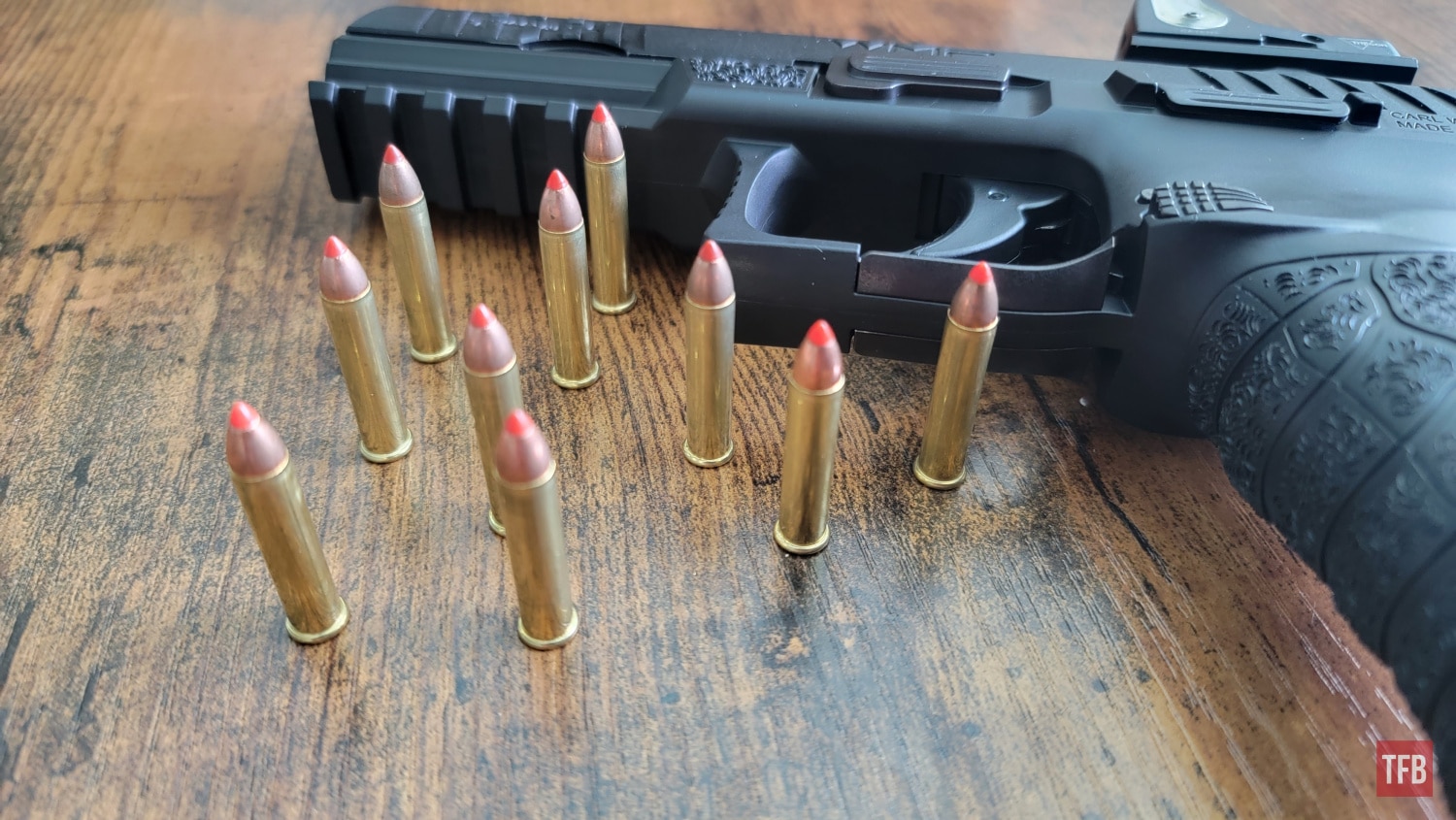
Been shooting a new Walther WMP (Walther Magnum Pistol) a lot lately. It’s a .22 Magnum semi-auto, full-size, easy-to-shoot, lightweight, 15-round magazine capacity weapon; and since it is made by Walther headquartered in Ulm, Germany, you know it’s high quality.

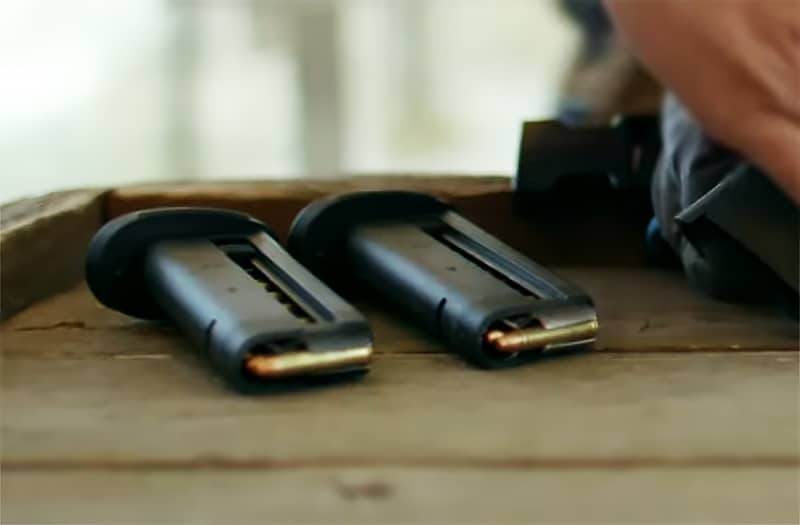
Many weapons perhaps do one thing exceedingly well, and the WMP is no exception. And in this case, it’s this: the WMP can lay down a wall of suppressive fire. There are several reasons for this ability: large magazine capacity, minimal recoil of the .22 magnum cartridge, sensitivity of the trigger pull, the ergonomic fit of its full-size (more surface area to grip,) and it’s 46 ounces with a full 15-round magazine, so the weight and semi-auto action “eat up” some of the felt recoil – remember that is small anyway with a .22 magnum – so you can keep the weapon on target and rapidly fire again, and again, and again.

To put down a base of fire, the weapon has to fire reliably, and sometimes rimfire cartridges do not, even when struck by the firing pin. They can also be finicky cycling in semi-automatic weapons. Walter understands this and has tested probably every make of .22 magnum ammunition, along with their various muzzle velocities, and bullet grain weight – in this case weights of between 30 grain and 50 grain. With every new weapon (and online at their website) they include a list of several dozen different .22 magnum rounds and rate them as follows: “works OK,” “works well,” “works very well,” “works best,” and the two dreaded categories “inconsistent,” and “not recommended.”

Every individual firearm has a unique ability to fire some rounds more reliably and more accurately than other rounds. Some of that ability is driven by the ammunition, but there are often other factors. How do you hold the firearm? How do you squeeze the trigger? How often do you clean the weapon? When you do clean it, how thorough is that process? How much lubricant do you keep on the weapon? With semi-autos, how much detail do you spend loading the magazine with rounds? And last, I believe that almost every weapon has its own tiny variations making it unique. Some come during the manufacturing process, but others include how many rounds have already been fired through it in its operational life, and how rough it has been handled, so maybe it is tighter or looser than even the next firearm originally made on the assembly line years ago.

Walther understands all that, and they probably fired more rounds of every type of ammunition through the prototypes to finished products than you or I could ever fire in a lifetime of shooting. And yet, some reviewers – who may or may not know what they are doing, what their motivation is, or even if they are on the payroll of a competitor, fire some number rounds (under conditions that the reader does not fully know) and proclaim that a weapon is not reliable. If the manufacturer tells you that ammunition Type A is “inconsistent,” or “not recommended,” believe them.

For the particular Walther I have shot, the most reliable rounds have been (first) Hornady Critical Defense .22 WMR, 45 grain FTX (classified by Walther as “works very well”) and (second) Federal Small Game 50 grain JHP (which Walther says works well.) Probably have put a couple hundred rounds of each through it, with no failures, no jams, didn’t fire, didn’t chamber. There are a couple of types of ammunition that Walther rates even higher: Fiocchi, Shooting Dynamics, 40 grain, JHP; and CCI MaxiMag 40 grain JHP and MaxiMag 40 grain Target.
Why would someone even consider suppressive fire as an attribute for a civilian firearm? Certainly that is a good quality for a military small arm – and even artillery fire is used to suppress targets – but what circumstances in a civilian environment would require that? First, rule out a zombie attack; that makes for great TV and movies. And, if zombies ever do attack, looks to me like you have to blow their heads off with well-aimed shots, as they don’t worry about being suppressed!

Let’s examine two environments present in non-military events in which you might find yourself. Out in the wild, you might be treated to an unplanned encounter with a few feral dogs, wild pigs with babies, something that might be rabid running at you – in short, unprovoked, quick-developing, potentially deadly, shocking situations where your goal is to get out of there by deterring the pack and getting to your car PDQ (pretty damn quick.) You aren’t concerned about humane kills; this isn’t hunting, but self-defense. Granted, a single .22 magnum round probably won’t drop porky or a rapid dog. But fifteen “hornets” stinging everything they hit, coming from something spitting flame out the front presents the animal with its own decision to avoid more pain and leave PDQ. And since Walther gives you an additional 15-round magazine, the hornets have more buddies.
Now for the two-legged threats, and here it gets more complicated. First, let me get a personnel peccadillo off my chest. In the over fifty years researching various military armies, and participating in two wars (not as a hero mind you) I believe that most human beings will not attack you in kamikaze-style attacks, or drug-fueled charges, where they feel no pain and keep coming after multiple rounds hit them. Bullet wounds hurt. Few things control human behavior like pain. If the aggressor is hurt badly enough he or she will usually stop. The reason that kamikazes in the Pacific were effective to the degree they were is that they went against almost all previous military tactics and thus gained surprise, which gave the Japanese a temporary psychological edge, until the US figured out how to combat them. Even the vaunted Waffen-SS hunkered down at Kursk under heavy Russian fire, and those boys were as fanatical as they get.
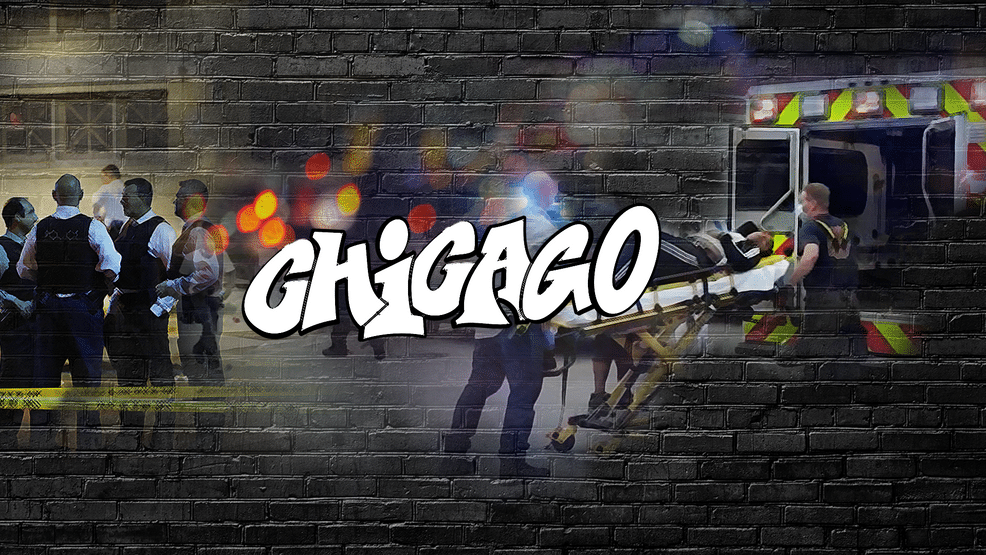
“Combat in cities” is what thousands of Americans face every day across the country. Chicago, Detroit and St Louis all seem to be vying for the worst murder rates in the country year after year. What do we know about urban killings? Many are gang-related, conducted by dangerous, but tactically inept marksmen and cowards who go after those who cannot defend themselves – often children and senior citizens. They beat women smaller than they are. These killers are not brave, and certainly not willing to die for the honor of the gang. They are not going to charge you while their homies are dropping around them. They are frequently alcohol or drug impaired.

Their biggest tactical asset is that they are familiar with the terrain in which they prey like hyenas, but like hyenas, they run from lions, whom they call pigs, the police who fight back. Their other characteristic is that they have intimidated their peaceful neighbors into remaining silent; snitches get stitches. Often it is more than stitches. His own gang, the Black Disciples, killed eleven-year-old Robert “Yummy” Sandifer because it feared he might become a police informant.
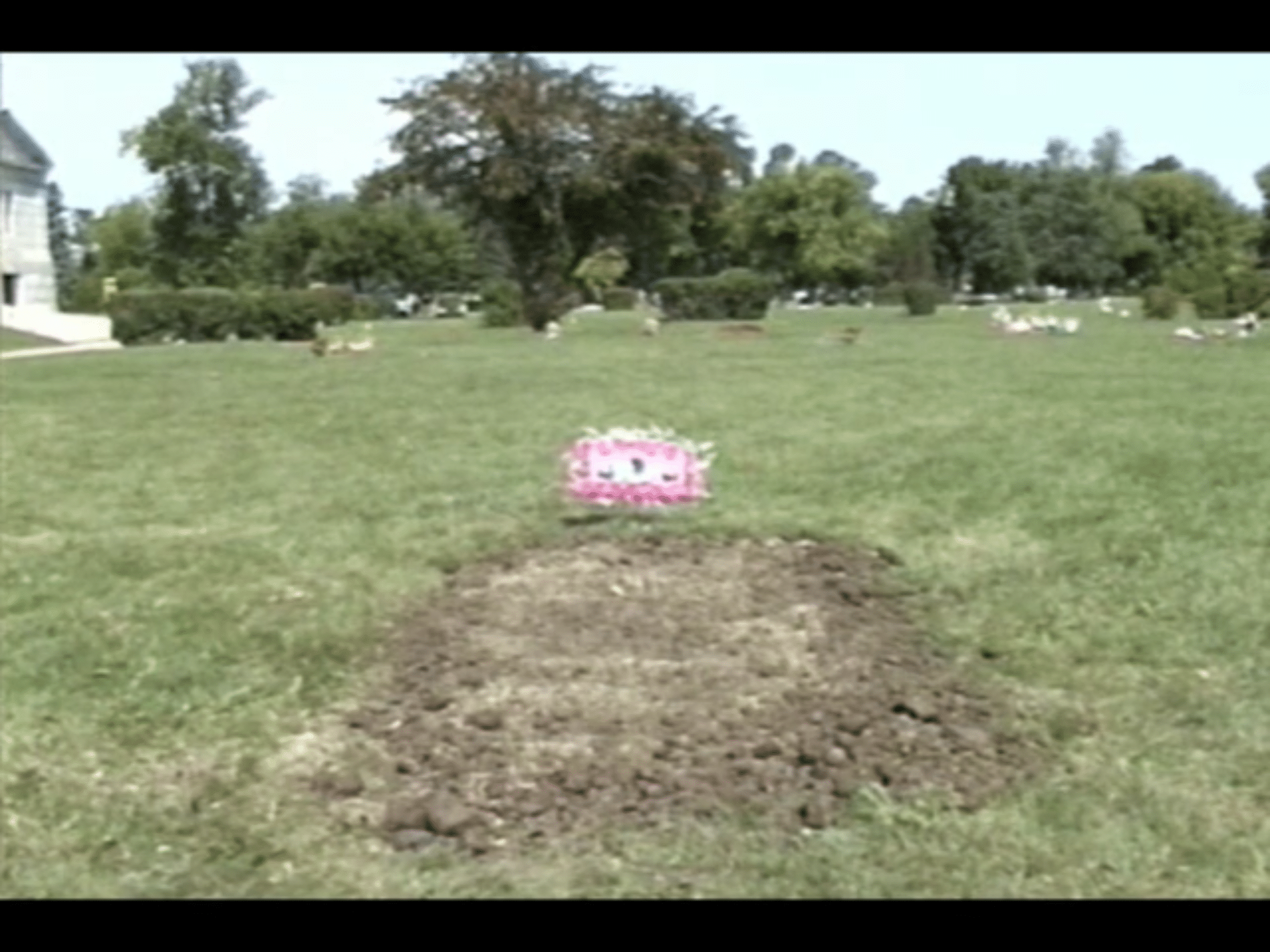
“Yummy” Sandifer’s grave
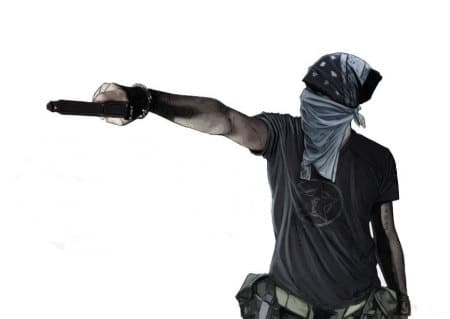
“Gangstas” (street gangs, often known as nations,) often use a pistol sideways just because in their world it looks cool. They usually don’t worry about holsters in concealment; they often shove their pieces in their coats or pants pockets, or pull their pants up and “Mexican carry” (carry in the front or back without a holster).

So what can you do? Most effectively, stay out of danger zones. Each individual gang is divided into sets which are territories spanning blocks or neighborhoods that may be divided further into subsets. The police in every city and town will tell you what areas to avoid. If you live in a bad one, try and do whatever it takes to move out, and never come back. If you do not live there, there is no reason for you to take a chance and visit. Do not, sightsee, shop, dine, or do any other voluntary activity. Do not drive through them; they are the home of stray shots that may never have been targeted at you, but you were there at the wrong place at the wrong time. Concerning your profession, refuse to work in these areas, or even drive a delivery truck into them, but rather seek employment in safer areas. This isn’t an issue of race. Violent criminals come in every stripe, color, gender and every other characteristic.

If you must reside or work in these areas, you need to be armed, and maybe the characteristics of the Walther WMP may be right for your situation, although it is a bit large for easy concealed carry on your body. You do not want to kill one of these punks, even though in the scheme of life they are pretty worthless. You just want to wound your attacker and cause him to flee, which may be 3-4 attackers, all of whom may be armed. Hitting an attacker with a .44 magnum, .357 magnum, 10mm, or other big “manstopper” round is probably going to kill him if you hit him with a round center of his chest, which is what you train to do (Remember, head shots are for Hollywood.)

With the WMP’s barrel length, Hornady Critical Defense .22 WMR, 45 grain FTX will penetrate a human 13-14 inches, as tested by the FBI, and often expand to .40 inches. That means that many rounds will not penetrate all the way through the bad guy, which translates to a lower probability that someone behind them, and thus not involved, will be hit.

But a couple of .22 magnums in the arm and maybe 1-2 in the leg? His attack on you is very likely over, and the police have better things to do then find out which gang-banger shot another gang-banger, especially if no one gets killed. Cook County, Illinois, States Attorney Kim Foxx has even refused to bring charges over shootings involving “mutual combat” arguments – even when one person was killed! These gang members are not going to go to the police and admit that they were trying to rob someone, and got shot in the process. That makes them look weak; and weak street gang members are often eliminated by their own bosses, because there’s no real retirement plan.

Suppressive fire may be just the key, especially in situations where it is unlikely that there are innocent bystanders who might be hit by your fire. But if you practice, something the gangs in Illinois cannot truly do, because they have criminal records and cannot own a firearm legally, or buy ammo, or visit a range, you can control the situation, not just fire wildly, but a controlled suppression fire that can turn the tables on them. They are not well-versed to determine what type of weapon they are facing. Hearing multiple shots fired leads many people to believe they are facing multiple opponents. They are not seeking that.

But remember; you cannot talk your way out of many, if not most, attacks. Your attackers do not care about you. You are prey. Unless you are a rival gang member, they may have nothing against you. You might even just be an initiation target that a new gang member has to kill to get full membership in the gang. And ditch that sentimental gentleman in you if you are male; a recent study found that in Chicago, 8 percent of female students reported they were in a gang at some point between sixth and tenth grades, compared with 13 percent of boys. In either case, if they are trying to hurt you, you are in danger of losing your life, so turn the hornets loose on them.

Walther WMP .22 Magnum2023-06-21T11:08:52-05:00

Dead Man Walking

There have been a great number of recent articles about the future of Vladimir Putin, but as Winston Churchill once described Russia as a “riddle, wrapped in a mystery, inside an enigma,” who really knows what is going on?

“Any fool can commit a murder, but it takes a true artist to stage a natural death or suicide,” said KGB defector Walter Krivitsky in 1941.  A recent drone-attack supposedly against Vladimir Putin raises questions on the gentleman’s future.  He says the Ukrainians did it, but maybe it was the Russian military or someone close to him.  The Russians seem pretty clumsy in many walks of life, but whacking their own has long been a fine art.

Joe Stalin had a real thorn in his side with Leon Trotsky.  Once, thick as thieves in the old days of Marxist intrigues in Mother Russia, after the successful revolution against the Tsar, Bolshevik takeover, and death of Lenin, Leon ran afoul of Joe and was exiled.  He continued to yap against Stalin, who finally decided Leon had to go away permanently.  By 1940, Leon was in Mexico City and in bad health, fearing that he would suffer a cerebral hemorrhage.  Would he ever!  One day, Spanish-born NKVD agent Ramón Mercader, approached Leon from behind in his study with a mountain-climbing ice axe and planted it a couple inches into his brain.  Adios Leon.

Thousands of other significant figures in the bloody last one-hundred years of Russian/Soviet history were murdered as well, such as: Yevhen Konovalets (Ukrainian,) 1938, explosive hidden in a box of chocolates; Lavrentiy Beria, 1953, shot through forehead; Sergei Kirov, 1934, shot back of the head; Grigori Rasputin, 1916, a combination of cyanide-laced cupcakes, poisoned wine, three gunshots, and drowning.

So how might Vladimir Putin meet his end sometime soon, thus is already a dead man walking?

Vlad, stay away from windows in tall buildings.  It is amazing how many Russians have recently died “committing suicide” or “accidentally” falling out of high windows.  Marina Yankina (high-level Russian defense ministry official,) St. Petersburg; “law enforcement agencies haven’t ruled out that she took her own life.” Ravil Maganov, (chairman of Russian oil giant Lukoil,) 6th floor, Central Clinical Hospital of Moscow; “It’s unclear why Maganov was in the hospital in the first place.”

I don’t know if you have any one-story ranch-type houses over there, Vlad, but if so, they’re pretty nice and you don’t have to climb stairs.

Vlad & Alina

Vlad, get rid of every rope.  In your office, the house, dacha, or love nest with Alina in your penthouse at Korolevskiy Park in that resort city Sochi on the Black Sea.  (Hey, Vlad, if I know, everybody knows.)  Hanging seems to be the demise of numerous oligarchs lately, and if there aren’t any ropes around, you are halfway to safety.

Vlad, don’t accept any statuettes as gifts.  You know what happened to pro-war blogger Vladlen Tatarsky at a St. Petersburg café, where he had been attending a patriotic meeting with supporters as a guest speaker.  Kaboom!  Vlad, you probably aren’t getting an Oscar anytime soon.  Have people who want to give you trophies or other gifts, leave them on a big table about 100 yards from where you are sitting or speaking – further away if you think it might be a suitcase nuke.

Snaiperskaya Vintovka Chukavin sniper rifle

Vlad, get really familiar with that Snaiperskaya Vintovka Chukavin sniper rifle.  You know, the SVCh, that you all replaced your old Dragunov SVD with, and that you personally took a peek through, and maybe even fired.  That bad boy has a maximum range of more than 1,600 yards.  The Chukavin, mostly chambered in 7.62x54R, also comes in .308 Winchester and the high-powered .338 Lapua Magnum.  The Lapua version has an estimated effective range of 1,640 yards.  Why is that important?  Because the Russian sniper that bags you is going to try to throw off suspicion.  Lapua ammunition is made in Finland.  Finland just joined NATO and they hate Russians.  You feeling me, Vlad?

The shooter, who will bag you from almost a mile away, is based at the 161st Special Purpose Specialist Training Center in eastern Moscow.  You’ve probably already met him; he knows you – your size, your gait, the bench you sit down to rest for a moment while walking, all your routines.  You should have paid attention to him; steely eyes that don’t blink much is my guess.  He belongs to Unit 29155; you know, Andrei Vladimirovich Averyanov’s boys.  Andrei has direct communications with both the chief of the GRU (military intelligence, which has its own spetsnaz [special ops]) and to the Kremlin.  Wonder who Andrei talks to, Vlad?  He drives a 1996 VAZ 21053, a rattletrap Russia-made sedan.  Maybe you ought to buy him a new car.  Just sayin’.

That rifle may have an American scope on it, or even a thermal sight that you all bought from the Taliban after the Americans unassed Kabul and left a few thousand.  It’s probably already been used in Syria, and has a ten-round magazine, but the shooter won’t need more than one.  Good news is he won’t target Alina and the kids, because the Finns wouldn’t do that (see above, Vlad.)

Your successor will just say that you shot yourself.  Or it was an accident when you were cleaning your own personal SVCh.

Do svidanya (до свидания)


Dead Man Walking2023-08-08T12:34:56-05:00

Air Janes

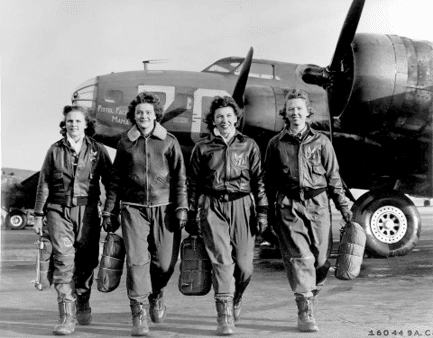
While researching Dying Hard, I came across some history that I had been unaware.  In World War II, thirty-eight ladies of the Women Airforce Service Pilots (WASP) perished in service to their nation piloting military aircraft, flying almost everything their brothers did including B-17 Flying Fortresses, one of which sported the feisty name of “Pistol Packin’ Mama” because the “Air Janes” were just as saucy as the guys.

Air Crew Pistol Packin’ Mama

The organization was a civilian pilots’ outfit, whose members were actually US federal service employees who became  trained pilots who tested aircraft, ferried aircraft, and trained other pilots so as to free male pilots for combat roles.  Some 800 completed all training.  Here are some period illustrations relating to Air Janes:

Fifinella, the Women Airforce Service Pilots (WASP) mascot, created by The Walt Disney Company

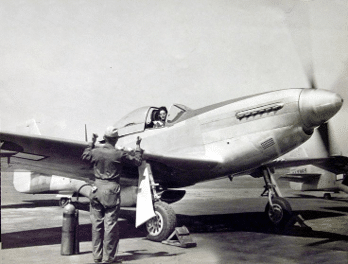
Air Jane in a P-51 Mustang

Air Janes belonged to the Air Transport Command and wore this insignia

In 2009, members of the WASP were awarded the Congressional Gold Medal.  There aren’t many left, so if you get to meet one, tell her thanks and see if she has a story to share with you.  It’s probably a once in a lifetime opportunity to meet a real live hero.

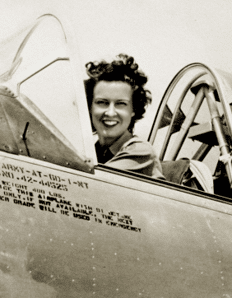
Air Jane in the cockpit

Air Janes2023-06-05T21:47:10-05:00

Dying Hard — Heroes

America’s soldiers in World War II come from all corners of America – the teeming cities of the northeast, the rural south, the golden sun of California, the farms of the Midwest, coal country of Appalachia, cold country of Minnesota and even from the Standing Rock Indian Reservation somewhere on the endless Dakota plains. Some are illiterate, needing their buddies to help them read letters from home; others are college boys from schools like “Ole Miss,” University of Maryland, Santa Monica Junior College, University of Kansas, and Bradley Polytechnic Institute.

Jay Lavinsky (now Jay Lavin)

But college boys are in the minority; most start work at an early age to help the family, and a lot of them are more familiar with hard manual labor than they ever wanted to be. A couple have dangerous jobs up in towering treetops as lumberjacks, or deep underground as coalminers. Several toil on hard-scrabble farms, another is a harbor dredger under the scorching Georgia sun. One stands in front of a hot plate hoping someday to own a small restaurant; another crouches behind home plate chasing his dream of playing catcher in the Major Leagues.

A few are married; a few are spoken for; many think they are God’s gift to women, but more than a few are too shy to even ask a girl to dance. Descended from Austrian, German, Italian, Russian, French, Scottish, Irish, Lithuanian, English, Danish, Canadian, Swiss, Mexican, Korean, Filipino, Swedish, Romanian, Ukrainian, and Polish immigrant parents, they have nicknames like Mac, Hawk, Kenny, Willie, Noodles, Timber, Doc, Vito, Candy, Greek, Buster, Bulldog, Porky and Russian. Not all are born across the fruited plain and are more than happy to tell you about the “old country” of Scotland, Austria, Hungary, Ireland, Italy, Mexico, Poland, the Philippines, Greece, China, Norway, Canada…. or Texas.

They all would give their eye teeth to see their mothers just one more time; ladies with names of Pearl, Anne, Fern, Edith, Eva, Pauline, Rose, Tarcila, Grace, Estelle, Antonetta, Ruth, Lupe, Elena, Apie, Ella Fair, Margaret, Maria, Minnie, and Lillie Mae, because every mother thinks that her own son is the cat’s meow. And while each son would trade a few of his tomorrows to be sitting at Mom’s kitchen table tonight, not a one of them one wants to become a Gold Star in her window.

Gold Star Mothers flag , in the window of Mothers who lost a son or ...

Jay Harvey Lavinsky, at the top of the page, was in Company B, winning two Bronze Stars with V for Valor, before being wounded by six German machine gun bullets outside a small village in Germany on March 4, 1945. However, six days before that, before the dawn’s early light on February 28, something very tragic happened as Company B advances against small arms fire, mines and self-propelled gunfire at the western edge of Berg, two miles southeast of Nideggen. Jay Lavinsky and Harry Nodell, who Jay calls “Brooklyn,” are involved in street-clearing operations. In the dark night, Jay cautiously leads part of the squad, supported by a bazooka team, down the left side of a street, when he hears German drifting from a basement window and tosses a hand grenade through it. On the right side of the street, Nodell spots a German half-track and approaches it, despite a cry of alarm from Lavinsky. The vehicle’s machine gun drops Brooklyn with a lethal burst to the neck. As other soldiers engage the enemy, Jay runs to his fallen comrade and holds him in his arms, screaming: “Listen you son of a bitch; you better not die on me!” Harry looks Jay in the face, winks, smiles, and dies in his arms. Jay will go several days before a change of clothes is available to swap for his blood-soaked uniform – drenched with the blood of his closest friend in the world.

“Brooklyn” Harry Nodell

“Brooklyn’ Nodell left a wife and two young daughters behind. Mollie never remarried. He became a Gold Star in his mother Agnes’ window. Jay survived the six bullets and subsequent five operations, and is now 100 years old. He is in a wheel chair and in the last fight of his life, because at least here on this Earth, a person cannot avoid “the Grim Reaper.” The Veteran’s Administration worked miracles and got Jay into long-term care at their West Palm Beach facility, and Jay is taking that fight to the later rounds in boxing terms, because there is no quit in Jay. He knows all about that because when he was young, a family friend in his hometown of Philly is like an uncle to Jay – Barney Lebrowitz, who boxes under the name of “Battling Levinsky,” former light heavyweight champion of the world. Jay learns as much of the “sweet science” as he can from “Uncle Barney” and departs for England on April 5, 1944 to fight for America in some pretty rough places like the Hürtgen Forest, the Battle of the Bulge and the Siegfried Line, where German machine guns are nicknamed “Hitler’s buzz saw” or the chilling-nickname “bone-saw,” one of which got Jay.

So if you live in Florida and see Jay Lavin (his father changed their name after the war,) or see a World War II veteran anywhere you live, reach out and give them a hand — in thanks but also in helping them do the little things in life like walking out to get the newspaper, or even cutting the old-timer’s grass.

Over 400,000 military personnel made the ultimate sacrifice for us in that war. Just don’t just say “thanks for your service”: do something special for them.

Dying Hard — Heroes2025-03-25T10:05:27-05:00

The Third Bullet by Stephen Hunter

The Third Bullet by Stephen Hunter

A Bob Lee Swagger Novel

Simon & Schuster, 2013

(February 14, 2023)  I just re-read, for probably the fifth time because it is so well-written and a real pager-turner, The Third Bullet by Stephen Hunter.  Part of the Bob Lee Swagger series, this fiction book transcends that genre, which I’ll address in a moment, and is clearly on my all-time top ten fiction book list.

It would probably not spoil the book, which I have carefully stored in our hide-away in Puerto Rico so that I may read it every year when we are down there, if I mentioned that it is about the John F. Kennedy assassination in Dallas in 1963.  Kennedy’s picture is on the front dust jacket of the hard cover edition of the Simon & Schuster book (while Lee Harvey Oswald’s picture is on the back dust cover.)  On the front title page is a photograph of the murder weapon, the infamous Mannlicher-Carcano Model 38 carbine with its cheap and poorly attached Japanese-made scope, and on both the front and rear inside of the hard cover are detailed sketches of Dealey Plaza – which probably has no significance for 99% of all Americans except for being the site of JFK’s murder.

The book begins with the hit-and-run death of an author (a “gun-guy” that wrote about snipers and weapons,) which being a writer myself obviously caught my undivided attention.  The man’s widow does not believe it was an accident, so she contacts Bob Lee Swagger, who had been a sniper in Vietnam, who has had additional gun-related escapades in his later years, and whose body has so many old bullet wounds that it makes Swiss cheese look solid.

I will leave the story there and apologize to Mr. Hunter if I have said too much already.

Reviewer Lee Child (Jim Grant, Jack Reacher series) said of the book, “it might even be true,” while noted author Vince Flynn – who died shortly after The Third Bullet was published – opined that the book “answers the question ‘What if?’ in astonishingly plausible detail,” so if my modest writing skills remain unimpressive, at least you know that those two literary heavyweights liked Hunter’s book as well.

From Mark Lane (Rush to Judgment,) almost immediately after the assassination, to tomes published to this day fifty years later, authors have attempted to show that this group or that – with or without Lee Harvey Oswald’s participation – brought off the crime of the century, and some would say the most significant crime in the entire history of the United States.  Most of these books, while they add bits and pieces to the general body of knowledge surrounding the assassination, often fall short in two areas: the technical capabilities of the firearm (maybe more than one, you’ll have to read the book) and bullets in question, and that the route of the presidential motorcade did not become known until a short few days before the event.  Large, complex organizations do many things well, but doing them quickly is usually not a characteristic of the ponderous, as the author shows.

In short, after reading and re-reading Hunter’s work, one quickly concludes that the author truly understands firearms in all their complexity – and sometimes simplicity, such as a tour-de-force description of what the Mannlicher-Carcano was originally designed to do when developed in 1891 – as well as a consummate ability to leave no loose ends in the theory at the heart of the story.

However, there is another level to the novel that I mentioned earlier.  Later in the work, the main character, Bob Lee Swagger, is informed by several literary experts that people who loved to read great literature often develop a sense of how they could insert puzzles and clues in their work (be that writing or espionage, etc.) that some people might find, while others miss them; some of these puzzles – which were key to understanding “who done it” – were in plain sight, while others had multiple layers of detail and nuance; some of them followed a clichéd formula, while others are undramatic and small.

Why is this dialogue important?  Because the discussion is really not a focal point of finding “who done it.”  That revelation is already known in the first third of the book.

No, I believe that Stephen Hunter slid this conversation of literary puzzles into the book intentionally for someone to find much later in reading The Third Bullet – maybe decades from now after Hunter and I and those of us who were living in 1963 are long gone – and conclude:

“This story is not total fiction.  In fact, it is probably 70% true, maybe even more, and the author stumbled across it and promised his source that he would portray the book (‘Other names, characters, places, and incidents are products of the author’s imagination…’, humma, humma, etc.), as PURE fiction, when it is anything but a work of fiction at its heart.”

Read The Third Bullet yourself and see what you think.  Is it simply a work of fiction that is so well-conceived and adroitly written that Stephen Hunter hit it out of the park, or is it something more?

The Third Bullet by Stephen Hunter2023-08-08T12:36:18-05:00

Why Did I Write This Book?

I wrote this book for every soldier who served in Company B, 39th Infantry Regiment in World War II. The ones who made it back home and the hundreds who didn’t. So what is it all about? In short, the story is about one tiny American Army infantry company that fought for our country from November 1942 to May 1945 in World War II. But it’s a lot more than that.

Once upon a time, the forces of evil came within a razor’s edge of plunging the world into a second Dark Age. Many, many nations answered the call to defend civilization, but only one – the United States of America – could tip the balance of fate to victory for the defenders of what was good and right. And she did.

America won the war with a huge industrial base. She won it with a unity of effort seldom seen before and never seen since. She won it by bringing women and minorities into the war effort. She won it with magnificent technology. She won it with a few senior leaders in each military service and in Washington who had the remarkable foresight to comprehend the new character of this war and how it would be conducted. But most of all she won it with a bunch of boys who stood on God-forsaken battlefields around the world and in their own brazen and cocky manner snarled at their foe: “Not today Tojo; not today Benito; not today Adolf. Not today, not tomorrow; not ever. To get to where you want to go, Adolf, you have to go through us. And that ain’t happening.”

The cost of that victory was monumental – which is why we have so many monuments around the world to remember their sacrifice. Unlike in many other nations, however, most of America’s monuments are not triumphal arches or palisaded promenades, but rather her military cemeteries, unfortunately filled to the brim with her heroes. In World War II the United States of America lost 407,316 military dead – enough that almost every city, town, and village lost loved ones. As to civilian deaths worldwide, the slaughter estimates range from 45 million to 95 million – and the only reason America did not suffer millions of civilian deaths at home is because these same young Americans stopped the enemy before they could get here.

There have been thousands of books written about the war, maybe tens of thousands, based primarily on records and reports, and the accounts of senior officers. And many are excellent. But there has always been a problem. The enlisted men and women of America who fought World War II were notoriously reticent about discussing their experiences. Called “The Greatest Generation,” they should also have been dubbed “The Silent Generation.” Not only were they closed-mouthed, many seemed proud that they “wouldn’t talk” to the extent that children and grandchildren, maybe even you, of these soldiers came to the conclusion that even if they waterboarded “Old Gramps” – which they would never do to such a beloved person – he wasn’t talking, so why bother because everyone was just going to get wet.

Maybe it was because my father was so closed mouthed about the war that I wrote this book. Once in a while, you could get a few grunts and groans out of the old man if you were lucky, but he was of the mind that the war was a chapter of life already finished and better off not to be re-read. My brother and I would get a hint of his experiences when Dad stormed into our bedrooms each school-day morning, screaming at the top of his lungs in German to get out of bed, turning on every light, throwing back the curtains and, when he was in a particularly charitable mood, opening the windows all the way on frosty-cold mornings to ensure that you got out of bed – quickly.

Dad had spent some “quality time” as a prisoner of war (POW) at some place in Germany called Stalag VI G and obviously wanted his two sons – who had designs on attending West Point – to get used to catching hell like he did every morning there at that camp when a German sergeant did the same thing.

We are going to try to get their story right, in spite of their reluctance in life to talk much about the war. Of course, each one would insist that we not talk about his own efforts, but remember his buddies instead, saying that they were the real heroes, and what they were able to accomplish together. All were unique, and it was this individuality that made every other soldier better.

“A soldier can be a hero and a hero can be a legend and a legend can make a superman out of a soldier.” You will read about all about that; in fact, the intent of the book is to put you right alongside of the soldiers of Company B, 39th Infantry Regiment – in the same foxhole. You’ll start your journey at Fort Bragg, North Carolina where the division is formed. Then its’ off to England in 1942 and then we’re all going to Algeria, Tunisia and Sicily; we’ll see combat in each. After that it’s Normandy, France, and then we’ll head east to Belgium. This fighting is tough, but you’ll think the war will be over by Christmas. It won’t be. Your next stop is the Hürtgen Forest. If you survive that, and a lot of us didn’t, it’s on to another miserable place, the Hohes Venn. Then it’s Merode Castle (see photo above) and then Elsenborn Ridge in the Battle of the Bulge. The castle, built in 1263, has five-story towers, and a wide moat with 7-foot-deep, cold water. There is one entrance – a narrow bridge twelve feet wide, covered by machine gun fire. Getting into that castle, borrowing a phrase from poet Alfred, Lord Tennyson, you will be “stormed at with shot and shell.”

In January 1945 we’ll try and get warm and attack the vaunted Siegfried Line, where concrete bunkers have machine guns we call “Hitler’s buzz saws” or “Kraut bone saws” and when you hear them firing, you’ll know why. Then you’ll see the inside of a German POW camp. You’ll lose a lot of weight, be infested with fleas and lice, suffer constant diarrhea, get no hot showers, sleep three to a bunk, and see guys drop from typhus – while angry guard dogs try to bite you.

Meanwhile, Company B keeps fighting to the end of the war in Europe. It is a rough time and casualties continue at an alarming rate right through the end and a lot of our buddies died. After that, however, everyone did not just pack up their gear and head home. What would happen with Japan, how long will the occupation of Germany last, what is the system for a soldier to return home? Finally, there is a Conclusion and Epilogue; save them for last. Some of the book is sad; but much is funny, which could be offensive to some readers. But no less an authority than famed war correspondent Ernie Pyle had this to say about humor in war.

“It would be wrong to say that war is all grim; if it were, the human spirit could not survive two and three and four years of it… As some soldier once said, the Army is good for one ridiculous laugh per minute. Our soldiers are still just as roughly good-humored as they always were, and they laugh easily, although there isn’t as much to laugh about as there used to be.”

At the end of most chapters you will find a total of over fifty special topics under the category of “School of the Soldier,” an old Army term that has to do with teaching a soldier the really important stuff in the Army and how to survive, so you can tell their story when they wouldn’t.

History is the oxygen for storytelling; and storytelling is the essence of humanity. Once upon a time, your father, grandfathers, and great-grandfathers became part of that history which fueled a legend that should never die – in part because so many of them did. Your mother, grandmothers and great-grandmothers were legends too, sometimes in combat areas – such as the Philippines, where 77 Army nurses, the “Angels of Bataan and Corregidor,” were forced by the enemy on a 68-mile “death march” without food or water in 100-degree temperatures – or back home working in dangerous factory jobs building the Arsenal of Democracy. Now it is up to you whether that legend is passed down to your children and grandchildren, or whether you let that legend die. Because legends don’t die with a bang; they die with a whimper.

You might ask: “Why is it up to me to keep their story alive?” Because you would fit right in with us in Company B. How do we know? When something in life knocks you down, and you get back up on your feet, wipe the blood off your nose with your sleeve, and say: “Is that all you’ve got?” you’re in Company B. If people have told you that you were too small, or too slow or too anything, and you went out and proved them wrong, you’re in Company B. If you ever saw someone bullied by a group of people bigger than you and you jumped in to help that person, you’re in Company B.

You love dogs? In 1942, a young soldier found a stray dog in the Aleutian Islands, and took care of him until he was reassigned to the States. Putting the dog, named Buff, in his duffel bag, the trooper took him on the journey. Months later the soldier climbed aboard a troopship – Buff hidden again in his duffle bag – and went to Europe and Company B, where Buff served as a mascot and helped pull guard duty. So if you love dogs, you’re in Company B. And if you love to read a book about American soldiers, then you’re in Company B, too.

Why Did I Write This Book?2025-03-29T18:19:09-05:00

My Friend Eric Paternoster

My friend and West Point classmate, Eric Paternoster, died about three weeks ago.  We had known each other since 1970 when we entered the US Military Academy and were assigned to Company A-2.  Attended his Celebration of Life ceremony in Cincinnati last Friday and wrote down some of my thoughts on him.

A Man for All Seasons

As we look back at Eric Paternoster, it would be quite understandable to call him a “Renaissance Man” – someone with extraordinarily broad and comprehensive knowledge, and with expertise in multiple disciplines.  That was certainly true for Eric, who graduated from the United States Military Academy at West Point in 1974, served as an airborne, ranger, infantry officer, earned a graduate degree from the University of Cincinnati, and worked as a senior consultant with Accenture, followed by Ernst & Young, and finally with Infosys as the CEO of Infosys Public Services.  A “Renaissance Man”?  Certainly.

Sir Thomas More

But Eric was much more.  Five-hundred years ago, author Robert Whittington coined the phrase “A Man for All Seasons” describing Sir Thomas More, venerated in the Catholic Church as Saint Thomas More, an English lawyer, judge, social philosopher, author, and statesman – and perhaps most importantly a man who stood up to King Henry VIII, and for this offense was beheaded.  It is said that the executioner was so distraught that he begged for More’s pardon before carrying out his grim task.  To Whittington, “A Man for All Seasons” was a person ready to take on whatever life threw at him; a person suited for all occasions; who does not get flustered easily, but keeps a calm, efficient demeanor; a person who has proven to be extremely reliable and trustworthy; acts with grace and aplomb, but never demands to be the center of attention; and perhaps most importantly, follows their conscience, and acts correctly even when others may choose a less honorable path.

Duty, Honor, Country

In 1970, after completing Beast Barracks at West Point, Eric and roughly thirty other classmates reported to their new home, Company A of the 2nd Regiment Corps of Cadets.  One of their first orders of business was to elect their class honor code representative who would instruct and lead them over the next four years in a code of conduct that simply states: “A cadet will not lie, cheat or steal, or tolerate those who do.”  The penalty for failing to follow the code was equally simple; a cadet could be expelled from the Corps.  Eric firmly believed in the honor code and believed all should follow it.  Eric also believed it was his duty to explain the code fully to all cadets and to also fight for any cadet that Eric – following his conscience – believed did not willfully commit an honor violation.

Regulations were another matter.  Eric was of the belief that the new Monday Night Football program was almost a Constitutional right to watch – even if the end of that game came after Taps, and thus there were numerous occasions when he was apprehended in the company dayroom, game on and lights off.  And more than once, when Eric was caught in this abhorrent transgression, he refused to divulge who might or might not have been watching the game with him, but who had scampered behind a large couch and avoided apprehension, while Eric took the rap.

National boundaries could not contain this “Man for All Seasons.”  With Infosys Public Services, Eric helped fuse American and Indian knowhow, culture and intellect – along with expertise from personnel of several other nations – to forge boundaryless public sector synergies.  Eric would leave no stone unturned and once his vision included taking a large number of company employees to the Gettysburg Civil War Battlefield in southern Pennsylvania.  However, rather than simply describing a military engagement from some 159 years ago – the technology and tactics having little to do with today – Eric used the past to stimulate a day-long examination of the future for Infosys: who in the organization was monitoring the technology of present and future competitors?  How does an organization train, develop and retain quality employees and prepare them to be future leaders?  How do leaders transmit and ensure understanding of their vision of success to the entire organization?

And like every person for all seasons, Eric would be the first to credit others for his own success: his West Point classmates; his Army comrades; his business associates all along the way; his beloved University of Cincinnati; his family; and most of all his wonderful wife Diana Paternoster (nee Coleman).

Eric, we miss you in so many ways.  But we also thank God for the opportunity of having you in our lives.  Pride of the Corps.  As for everyone who never met Eric, I would submit this old poem by Rudyard Kipling that captured our friend in so many ways.  It is called If.


If you can keep your head when all about you
    Are losing theirs and blaming it on you,
If you can trust yourself when all men doubt you,
    But make allowance for their doubting too;
If you can wait and not be tired by waiting,
    Or being lied about, don’t deal in lies,
Or being hated, don’t give way to hating,
    And yet don’t look too good, nor talk too wise:
If you can dream—and not make dreams your master;
    If you can think—and not make thoughts your aim;
If you can meet with Triumph and Disaster
    And treat those two impostors just the same;
If you can bear to hear the truth you’ve spoken
    Twisted by knaves to make a trap for fools,
Or watch the things you gave your life to, broken,
    And stoop and build ’em up with worn-out tools:
If you can make one heap of all your winnings
    And risk it on one turn of pitch-and-toss,
And lose, and start again at your beginnings
    And never breathe a word about your loss;
If you can force your heart and nerve and sinew
    To serve your turn long after they are gone,
And so hold on when there is nothing in you
    Except the Will which says to them: ‘Hold on!’
If you can talk with crowds and keep your virtue,
    Or walk with Kings—nor lose the common touch,
If neither foes nor loving friends can hurt you,
    If all men count with you, but none too much;
If you can fill the unforgiving minute
    With sixty seconds’ worth of distance run,
Yours is the Earth and everything that’s in it,
    And—which is more—you’ll be a Man, my son!


My Friend Eric Paternoster2023-02-14T18:00:09-06:00

Don’t Pull the Switch

The Death Penalty. Sooner or later a case will bubble up to the Supreme Court and they’ll have to rule on its constitutionality. That’s why I sent a copy of The Fifth Field to all nine members. And in one thank-you note, a member said he had never read about these 96 death penalty cases before. They better start reading, because they get one shot to get this correct, or the later unrest might be bigger than Roe v. Wade.

I used to be a big believer in the death penalty. And I still believe that there are some really bad people out there who don’t deserve to live among us. So in defending yourself, and your loved ones against a murderer who would take your lives, well if he takes his last breath in that attempt that’s just too bad for him.

As for the government using the judicial system to put someone to death, I don’t agree with that anymore. First, you can’t “undo” the death penalty, if you later find out that the guy you just fried in the electric chair didn’t actually do the crime. If the accused is convicted and gets a long prison sentence, you can let him out later if you discover he is actually not guilty, and at least try to make amends for the error by paying him and his family an extremely large amount of money; it will never make up for the lengthy prison time, but at least his later years will not be in poverty.

Juries make mistakes. Prosecuting attorneys and defense counsels have various degrees of competence and make mistakes too. Judges’ rulings often later get overturned. Even the vaunted US Supreme Court frequently has 5-4 decisions – meaning that 44.44% of the justices had the “wrong” legal opinion from the majority. But if 44.44% of our juries convicted the wrong guy and sentenced him to death, we would stop the death penalty immediately.

US Supreme Court

Secondly, law-abiding citizens, whether in the jury, or prison guards, or the few actually involved in the execution process, often suffer terrible mental duress for the remainder of their lives – even concerning executions where there is never any doubt as to the accused’s guilt. Yes, there are some who will “sleep like a baby” but others won’t. And that’s not an opinion; I was fortunate enough to be able to review 96 death penalty cases in the US Army in Europe in World War II, when writing The Fifth Field, and numerous military police involved in the executions had terrible emotional issues later – with at least one tough MP sergeant, Richard Mosley, later committing suicide.

Richard Mosley

But most troubling, charging someone with a capital crime – a capital crime is one for which you could possibly receive the death penalty – is often a matter of prosecutorial discretion. The prosecutor can put the death penalty into the realm of possible punishments, or the prosecution can “take it off the table.” That is a difficult decision for any prosecutor, and some are simply not up to it.

Most alarmingly, we are seeing that more and more prosecutors are using factors of race, gender, sexual orientation, religion, and even political affiliation in their decisions of whom to charge – or not to charge. That is bad enough concerning crimes that carry potential incarceration. But using those factors in such a way for a prosecutor to put his or her thumb on the scales of justice concerning the death penalty is unconscionable.

Do you really think that the current State’s Attorney Office for Cook County, Illinois, doesn’t often have their entire hand on the scales of justice – let alone thumb? Even the Illinois Prosecutors Bar Association and the National District Attorneys Association ripped into Kim Foxx’s decisions in the Jussie Smollett case.

Ferguson Riots

Do you really think that politics didn’t play a role in determining who should be charged concerning the 2014 disturbances, riots, unrest, uprising, demonstration, in Ferguson, Missouri? Even the US Department of Justice couldn’t get to the bottom of it, ruling on one hand that Police Officer Darren Wilson shot and killed Michael Brown in self-defense, while also determining that the Ferguson Police Department had engaged in misconduct against the citizenry of Ferguson by, among other things, discriminating against African Americans and applying racial stereotypes in a “pattern or practice of unlawful conduct.”

Regardless how you come down on events with political ramifications, no government should have that much power. We need to do away with the death penalty – before people get executed for their political beliefs.

Don’t Pull the Switch2023-06-21T11:57:28-05:00

Till

Till is a 2022 American biographical drama film that had its world premiere on October 1, 2022 at the New York Film Festival and will be released in the United States on October 22, 2022, by United Artists.  It obviously hasn’t reached Decatur yet, but looks like it is a very good movie, although the subject is a pretty rough one.  The two main characters are Emmett Till, age 14, and his mother Mamie, who is played by Danielle Deadwyler, and if she doesn’t get an Oscar for her performance they just ought to do away with the award.

Till

That’s because she plays a lady who has just had her son brutally murdered.  They live in Chicago and Emmett asks her if he can go visit Mississippi to visit family.  She agrees, and he never comes home alive.  There is no reason to spoil the show by recounting all the details.  If you can’t wait, read Emmett Till: The Murder That Shocked the World and Propelled the Civil Rights Movement, by Devery S. Anderson.

For everyone who thinks that history began the day they were born, and given the median age in the US is roughly 38, that means half of us start our personal view of history in 1984 and before that, Who cares?  But you should care, because this incident was a major factor that propelled the modern US Civil Rights Movement, which led to Reverend Martin Luther King, all the way up to today.

As you will see in the movie, after Emmett is killed and his remains are returned to Chicago, Mamie has a terrible decision to make — at the funeral should the casket be open or closed?  Families all across the country have to make similar decisions for their loved ones.  But it usually does not involve the remains of a 14 year old, and the remains are usually not so mutilated that it is hard to determine who the person is.  It is not a decision that the mother of a 14 year old should ever have to make.  But Mamie had to make it.

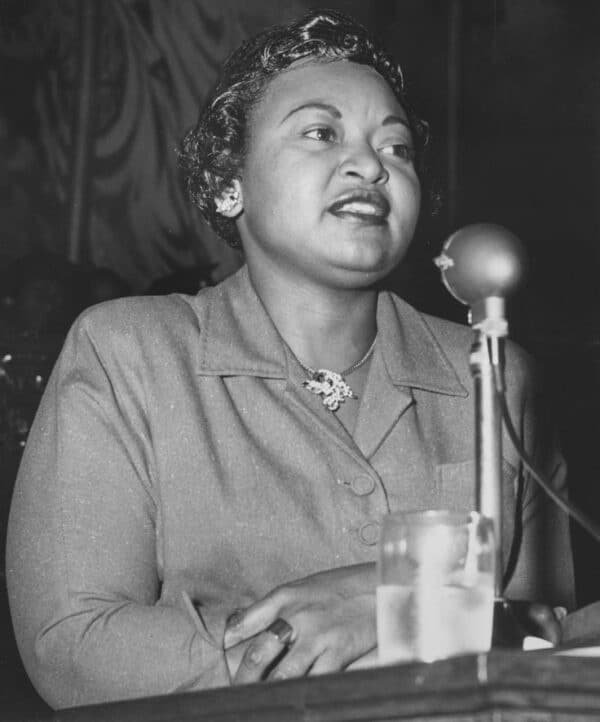
Mamie Till

Mamie could not have been faulted for deciding on a closed casket.  But she chose an open casket — precisely to show the world the brutality that was so shocking, that only an open casket could show its magnitude, the depravity of the crime and innocence of her son, whose life was snuffed out for no reason.

But history has a way of filling in the blanks and a book I wrote The Fifth Field, sheds light on Emmett Till, although I did not realize it until after I conducted the research.  The reason Mamie had to make this decision was that her husband, Louis Till, was not around.

Louis Till was from Madrid, Missouri, reportedly growing up an orphan.  An amateur boxer, he worked at the Argo Corn Company in Argo, Illinois – not far from Chicago.  He married Mamie on October 14, 1940; both Louis and Mamie were eighteen years old.  On July 25, 1941, they had a son, Emmett.  The couple separated in 1942; according to some sources, he had attacked his wife so violently that she defended herself by throwing a pan of boiling water on him.  On July 9, 1942, Till was inducted at Chicago, Illinois – according to a source, it was the Army or jail from a judge, who was tired of Till violating restraining orders.

Fast forward to June 27, 1944 near Civitavecchia, Italy – along the Mediterranean coast northwest of Rome.  Louis, who by now has two court-martial convictions, and four other men, assault and rob a US Navy sailor and then plan and commit two home invasions raping two women and killing another woman.  To make an interesting crime mystery short, Louis and another soldier are convicted of rape and murder, sentenced to death, and hanged at Aversa, Italy on July 2, 1945.  Louis and accomplice Fred A. McMurray were initially buried at the U.S. Military Cemetery at Naples.  Both were exhumed in 1949 and now are buried at the American Military Cemetery at Oise-Aisne, France in Plot E.  It’s a mysterious place and still pretty difficult to get into.  Till’s remains are in Row 4, Grave 73.

Louis Till Grave

In Fighting for America: Black Soldiers – The Unsung Heroes of World War II, author Christopher Paul Moore stated that Mamie said that, although she had received his wedding band and personal effects: “the Army had never told her the cause of her husband’s death.”  That was accurate to an extent; the Army was quite terse with every soldier executed stating only that it was due to “judicial asphyxiation.”

But don’t feel sorry for him.  He was brutal to Mamie; he was brutal to the two women he raped and the third that he killed.  The trial records support the conviction and the sentence, despite what some “experts” opine that all trials of minority soldiers in World War II were racially tinged.  Read The Fifth Field and make up your own mind.

Within these effects, however, was an item that would help Mamie ten years later.  Louis Till’s silver ring, bearing the date “May 25, 1943” and the initials “LT” that he purchased in Casablanca was returned to Mamie.  In 1955, she let Emmett take the ring to Mississippi, and after finding his remains, authorities identified his mutilated body, in part, through the distinctive ring and the initials “LT.”

Mamie Till died in 2003 at age 81.  She was buried near her son in Burr Oak Cemetery in Alsip, Illinois, where her monument reads, “Her pain united a nation.”

See the movie.  Read the book on Emmett Till.  Read The Fifth Field.  You can learn a lot from history.

Till2022-11-14T09:50:35-06:00
Go to Top